
Updated November 2026
Every few years someone declares that marketing has been reinvented. Usually what has changed is the toolkit, not the job. The job is still to understand people, make something worth choosing and tell them about it clearly and quickly. In 2015 Jonathan Gordon and Jesko Perrey of McKinsey captured the modern version of that job in five words: science, substance, story, speed and simplicity. I have used their five S’s ever since as a checklist for healthcare marketing. Here is how I apply each one.
1. Science: know before you spend
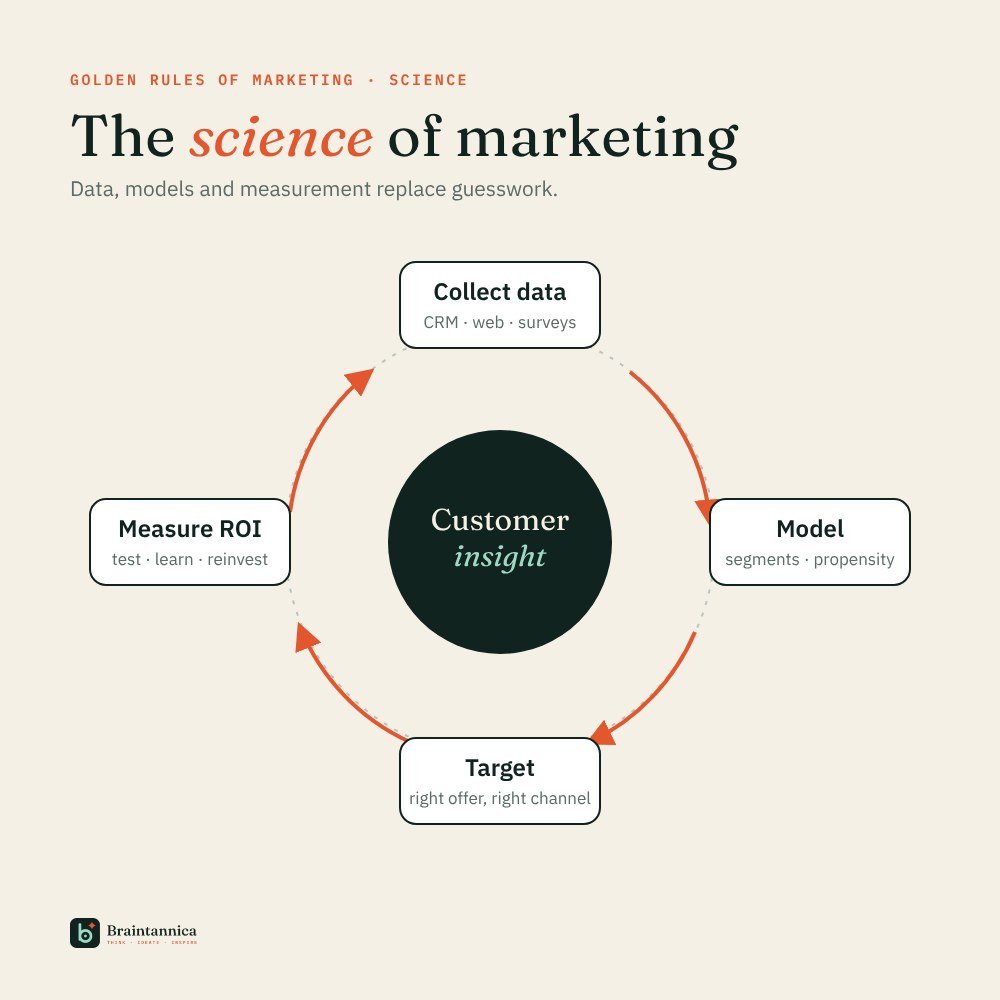
Marketing science means using evidence (data, research, experiments) to decide who to target, with what message, in which channel and at what cost. Hospitals collect more data than almost any other business, yet much of it sits in billing systems and enquiry spreadsheets that marketing never sees.
Start with the questions that move revenue. Which service lines bring international patients? Which source countries convert best from enquiry to arrival? Which referral partners send cases that actually travel? A simple conversion funnel, from enquiry to estimate to visa letter to arrival to discharge, will tell you more than any brand survey.
Then test. Run two versions of a landing page, two subject lines, two cost-estimate formats, and keep the winner. Science is not a department; it is a habit of asking “how do we know?” before spending money.
2. Substance: market the experience, not just the message
The second S is about what you actually deliver. Good marketing science quickly reveals that the biggest wins often sit outside the advertising budget: in the speed of a reply, the clarity of a price, the friendliness of an airport pickup, the ease of a follow-up consultation from home.
In healthcare, substance is the patient journey. A hospital that answers an international enquiry within an hour, sends a clear package price and assigns a named coordinator is marketing more powerfully than one with a bigger media budget and a slow inbox. Marketers earn their seat at the leadership table when they fix these moments, not just promote them.
3. Story: give people a reason to remember you
Data persuades the head; stories move people to act. Every strong hospital brand can answer three questions in plain language: what we are best at, who we are for and why we can be trusted.
The best healthcare stories are true and specific: a surgeon explaining a new procedure in two minutes; a patient from Nairobi describing, with consent, how she was received; a nurse coordinator’s checklist for families travelling with a child. Keep the story consistent across every channel, from the website to the WhatsApp greeting, so that each encounter reinforces the last.
4. Speed: move at the pace of the patient
Patients and partners now expect answers in minutes. Competitors in Türkiye and Thailand advertise quote turnaround times; facilitators send the same enquiry to several hospitals and go with whoever replies first with a credible answer.
Speed in marketing means short planning cycles, small experiments and the authority to act on results without waiting for the quarterly review. It also means service-level targets for the front line: time to first reply, time to cost estimate, time to visa invitation letter. What gets timed gets faster.
5. Simplicity: remove everything that slows the yes
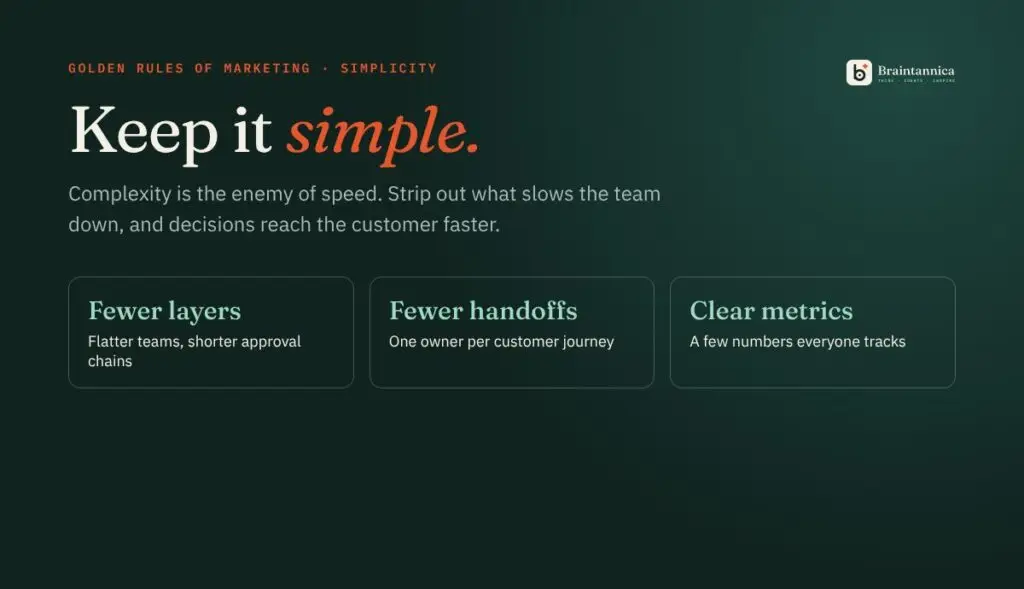
Complexity is the enemy of both speed and story. It creeps in through too many campaigns, too many approval layers, too many package variants and too many messages.
Simplify inside and out. Inside: fewer priorities, clear owners and one dashboard everyone trusts. Outside: one clear offer per service, one price format, one contact person and one next step on every page. A patient choosing a hospital in another country is already managing fear, cost and logistics; your job is to make the decision feel easy.
Putting the five S’s together
The five S’s reinforce each other. Science tells you where substance is weak; substance gives you true stories; simplicity makes speed possible; speed lets you run more experiments, which feeds the science. Score your team on each S once a quarter and you will always know where the next improvement lies.
Try this week
- Score your marketing on each S from 1 to 5. Be honest.
- Pick the lowest S and choose one fix for the next 30 days.
- Share the scores with your sales team and ask them to score you too.
Source: Jonathan Gordon and Jesko Perrey, “The dawn of marketing’s new golden age,” McKinsey Quarterly, February 2015. The five S framework is theirs; the commentary and examples are mine.